

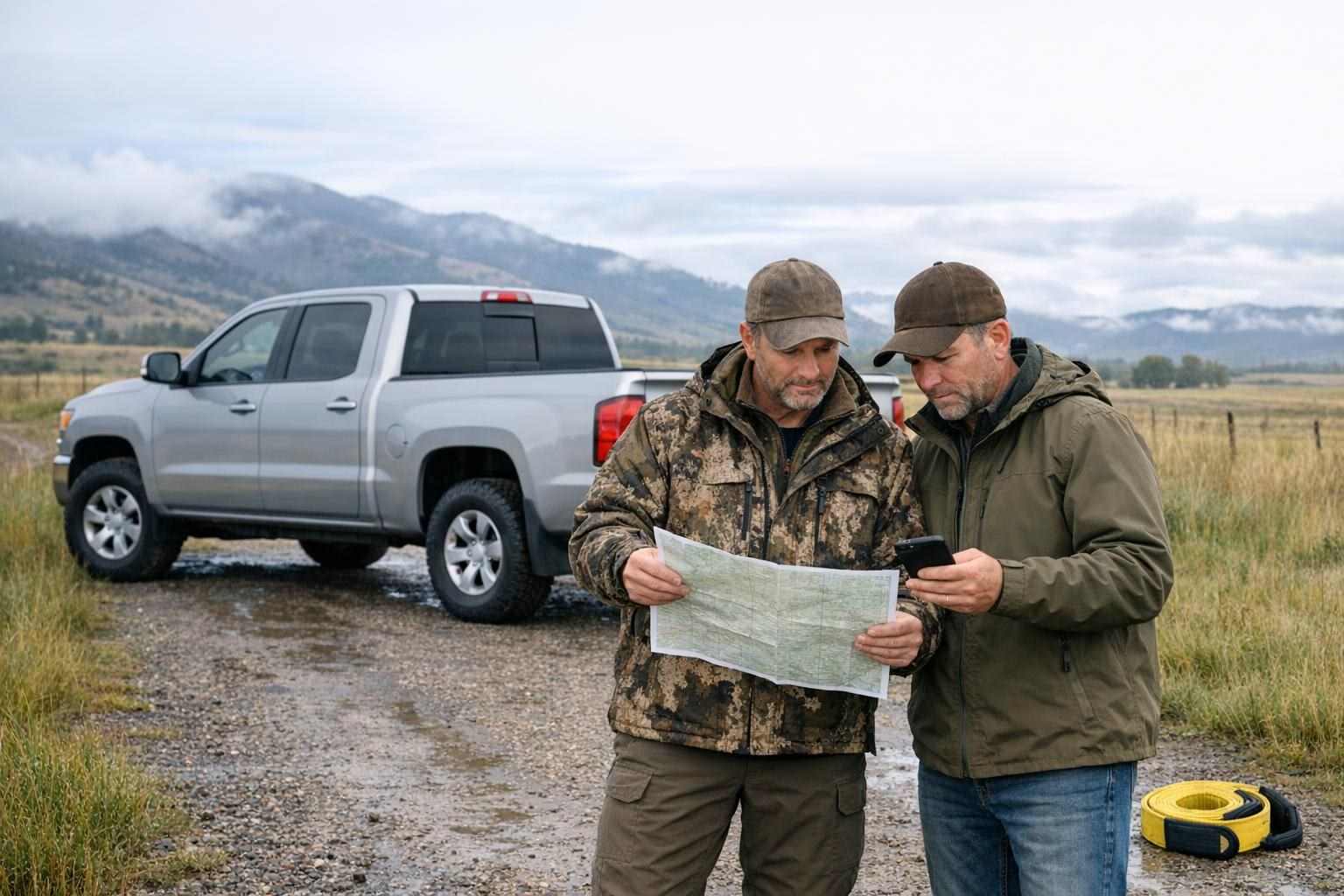
Keeping a Shared Hunting Weekend’s Travel Plans in One Place
Organizing a group hunting trip can quickly descend into chaos. Using separate text messages for different parts of the planning, people changing arrival times, people not knowing who is bringing what for gear, and people not knowing the emergency contact details for others in the group all create stress that can be easily avoided. Keeping the main details of your trip in one place is key to avoiding these kinds of problems and allowing you to concentrate on ensuring safe and ethical hunting.
Start with one source of truth
Choose a central planning document for the group – this could be a shared digital note, cloud document or group planning app – and indicate that this is the current version to be referred to for all plans. Consider printing off a copy to take with you and leave in a car in case you lose signal, run out of battery or are unable to access a device.
Assign a planner, but not a trip organizer. All information that a participant could enter (such as arrival time, gear, health considerations, special dietary needs) should be collected in the planner. The planner's job is then to reconcile any conflicts that are found.
Define an update rule for your travel plan. A simple note such as "Check this plan before departure" in the header or body of your document serves to inform others that only the most current version of the document should be referred to. It's also a good idea to keep a simple change log and record major updates such as changes to meeting points, lodging, travel etc.
Separate fixed details from moving parts
If you organize fixed and dynamic information accordingly in your shared document, this makes sense. In the first section you would enter fixed information such as the destination, the booking code of your accommodation, contacts, the assignment of vehicles, a fixed departure time and more of the like. In the second section you can add flexible information such as the check of the weather forecast, the selection of a route, the shopping for food, the swapping of equipment on the morning of departure and more of the like. Mark open questions clearly in the document with their owner and a deadline.
By separately listing the fixed details from the changing parts of your trip you can more easily organize and manage the different aspects of your trip. In addition to outlining the plan for the different parts of your trip for everyone to reference later, such organization makes it much easier to identify what still needs to be decided or confirmed prior to your trip. Marking open questions with an owner and a suitable deadline helps to manage them until they are resolved.
Also be careful when recording sensitive personal information in your plan, such as emergency contacts or medical issues. This information should only be accessible to people who have a legitimate need to know. Each participant should be able to share as much or as little information as they feel comfortable.
Build travel plans around real handoffs
Travel plans fail when the group assumes the other person has arranged something. Map out all of the necessary hand-offs i.e. who is collecting whom, who has the keys to the cabin, shared food etc. Have a backup contact for each main mode of transport.
Ideally one would like to know in advance how the group will handle being delayed on the road, or when a vehicle breaks down, but this is not necessarily something that can be worked out in advance. The plan should include information on where the group can head to in order to regroup should this be necessary, and how the group will be able to contact each other when they lose signal.
Be cautious when making decisions about driving on roads. Be sure that the vehicle is suitable for the road that you are intending to travel on and that the driver is well rested. Don't be pressurized into continuing on in poor road conditions, closed roads or in reduced visibility. Check with the latest official sources for current access requirements and for any closure's and restrictions before heading off.
Turn preparation into a responsibility check
This list of personal items should be reviewed by all parties and everyone should ensure that they have all of the necessary personal items. A shared list of shared items (e.g. tools, food, etc.) should be created and each person assigned to bring a particular item. This will help prevent duplication of items and make sure that everyone knows what they are responsible for bringing.
Utilize a simple check-off list with 'Packed', 'Borrowed' or 'Need to get' options for items such as personal gear and shared equipment that are required to be brought by participants. This will highlight any necessary items and allow for time to make other arrangements as required rather than consumers taking up valuable space.
Every form of hunting activity needs to be prepared and assigned in terms of the legal requirements for the relevant country or region. Here we are talking about the licenses required for hunting, permits for access to areas and game, as well as the dates when certain species can be hunted. There may also be rules relating to the transport of hunters and their game, so it is best to check with official sources for up-to-date information and to hold all participants to the same high standards of responsibility and preparation.
Leave room for ethical field decisions
In considering how best to plan your time on the hunting trip, don't fall into the trap of considering every minute to be spent in the field. Leave some margin in the schedule to allow for circumstances to arise which may need to be addressed in a different way than had been previously anticipated. The weekend need not be a complete and utter disaster if circumstances change and it is not possible to proceed as originally intended.
Set boundaries for decisions made in the field before heading out. Agree upon guidelines for deciding whether to hunt within authorized boundaries, adhere to the directives of the landowner where appropriate, and shoot safely. Consider the conditions that would warrant ceasing to search for animals to ensure humane and safe identification and recovery. Allow for members of the group to support other members who in good conscience choose not to hunt on a given day. Remember that pressure from other group members can force an individual to hunt against their better judgment in circumstances where time, finances and pressure from others to hunt are all at play.
When planning to go hunting, it is also important to discuss how you will be conservation conscious. You will need to work out how you can avoid causing unnecessary disturbance to wildlife and how you will dispose of waste etc. You should also work out how you will treat other people using the area and make sure that you leave the area as you found it.
Review the plan before departure
A short Review on the travel plan with all participants (even better than a perfect plan) – check the details of the Meeting point & Time, the roles of members in the transport of gear and participants as well as the means of communication etc. of each member. In case of any discrepancies, settle them immediately. Note the disagreements on e.g. the exact time of departure in the Check list below.
Create a simple check list of current decisions (safety and legality) such as: access permissions; required documents; current weather and road conditions; means of communication; fuel and charging needs; contact details for in case of an emergency; agreed return time and/or check-in point. Store the up-to-date plan offline and leave a copy of the essential details with someone not going on the trip.
After the weekend sort out what caused any confusion and amend any slight problems to make the next trip as trouble free as possible. Keep it simple and avoid over-managing the occasion – just sound planning to help good judgment.